

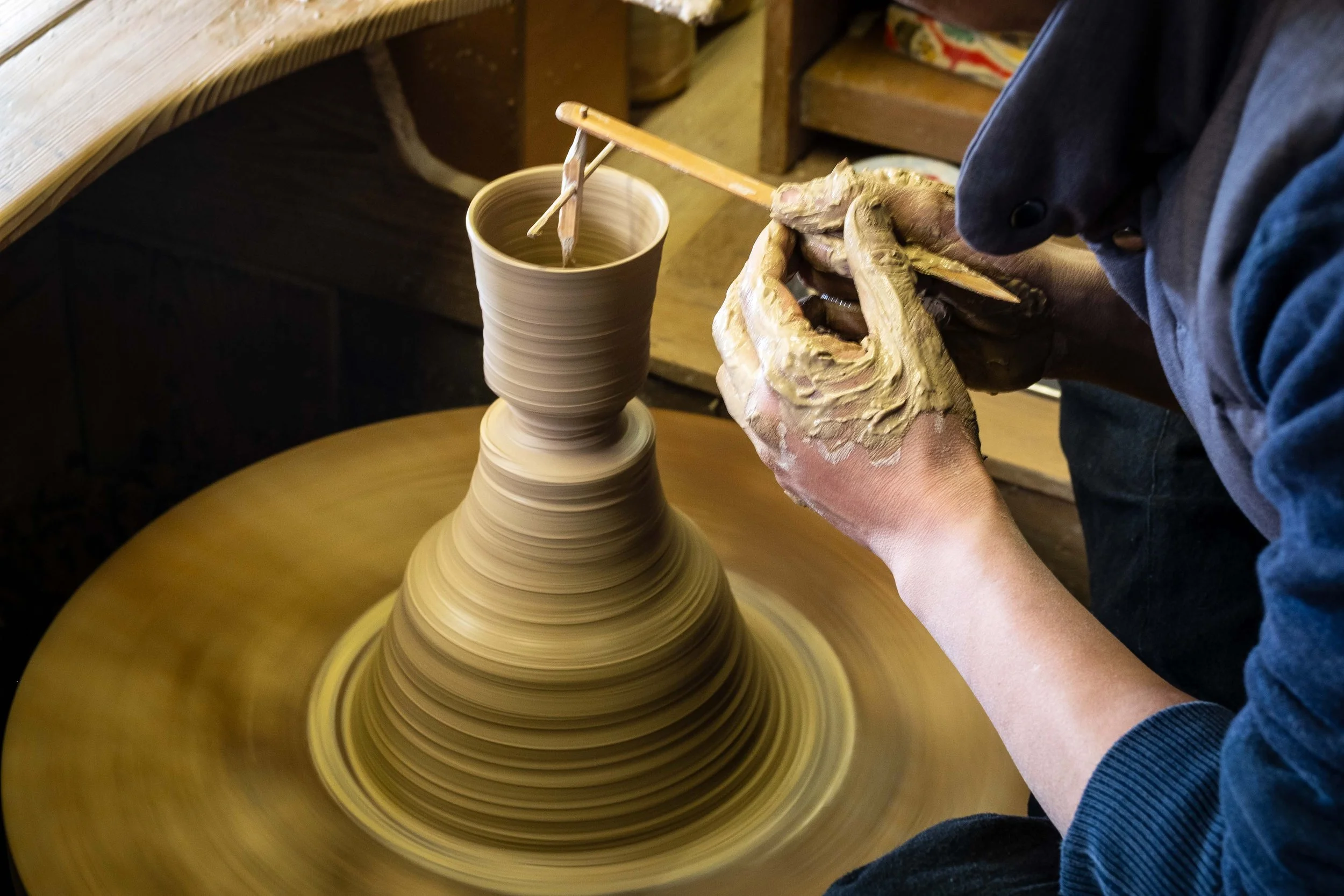
How Deep Can You See into Your Dishware?
Can you imagine doing the same job as your parents or grandparents? In the modern world, even third generation CEOs are rare. What about your great-grandfather, or great-great-great grandfather?
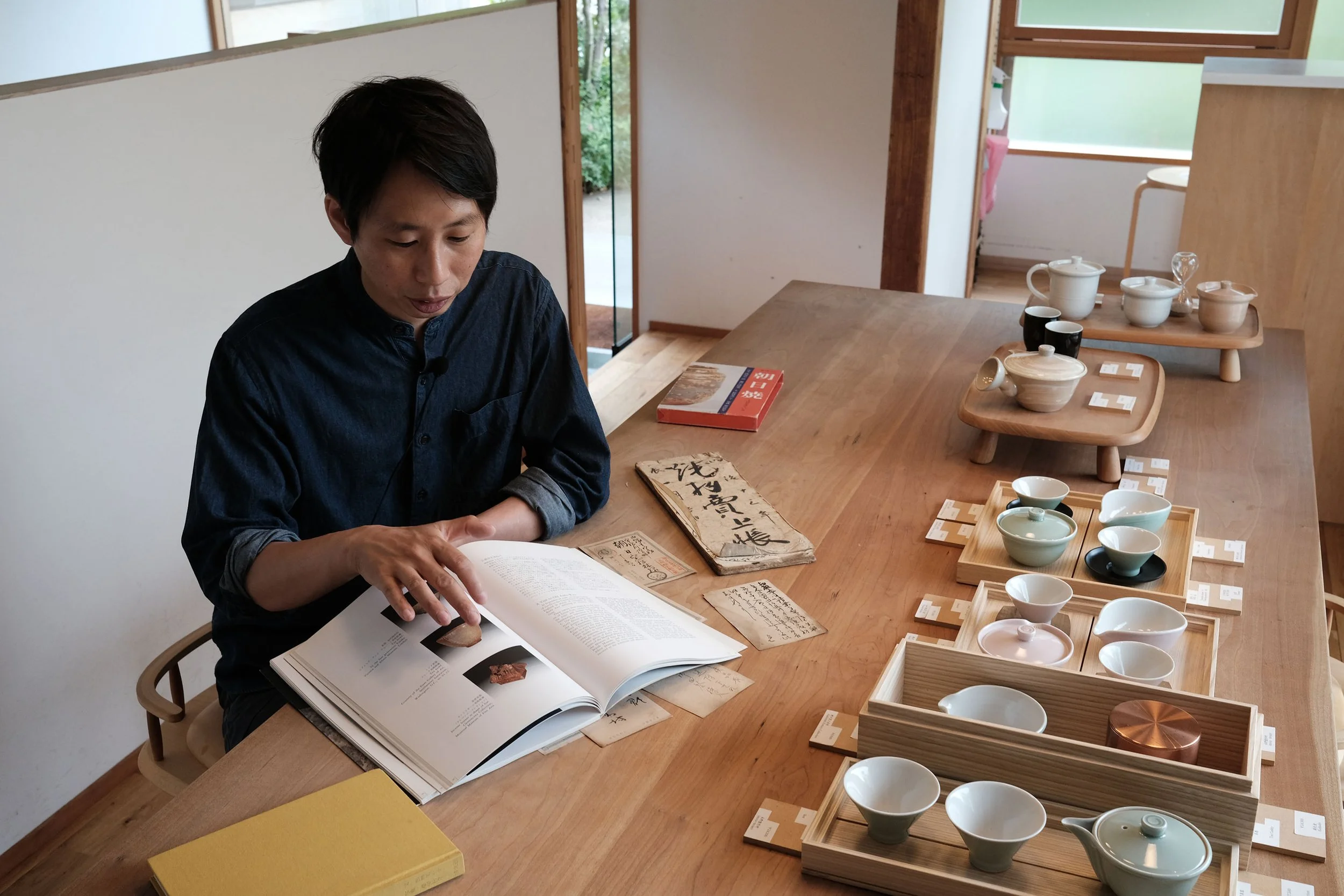
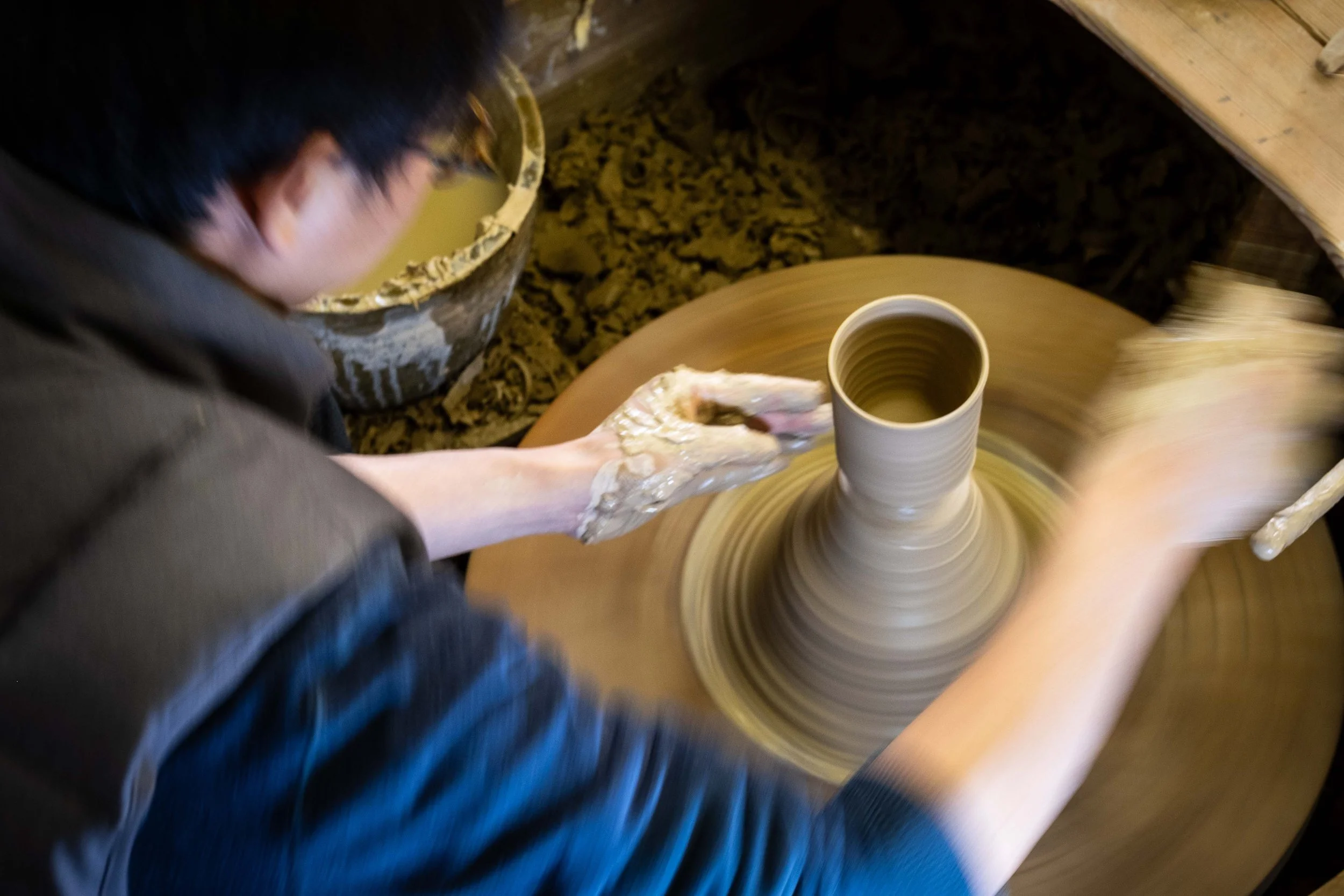
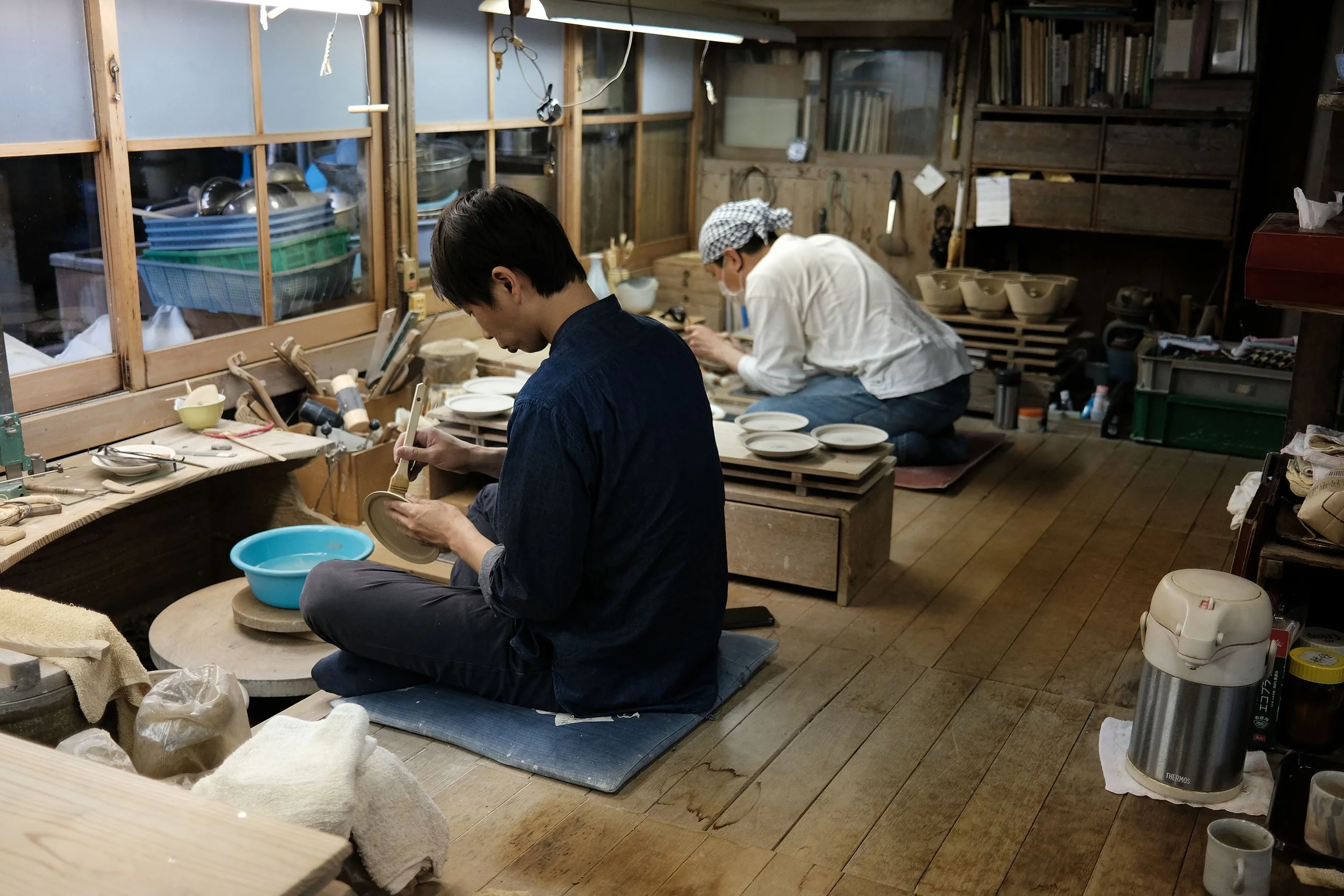
In Japan, many businesses, from the everyday to the eclectic, tend to stand the test of time and continue from parent to child across decades and centuries. It’s rather common in the more historic areas, shops that have lasted long enough are regarded as shinise, trusted generational shops. These have lasted three generations or more, usually at least a hundred years. In a city with 1,200 years of history like Kyoto, this is so common that it is often (half) joked that a shop isn’t really established in the old capital until it has been around for two hundred years, a feat not as uncommon as you would think.
In fact, since Kyoto, in its extended history as the center of arts and culture in Japan, you can find many examples that have lasted twice that long. In a place where the traditions of flower arrangement, the way of tea, the way of calligraphy, and many other arts came into existence, the schools of these traditions and the many craftspeople that support them have struggle through the arduous trails of time to come all the way to the present day.
One such example is the Asahiyaki pottery kiln in Uji, Kyoto. There, Matsubayashi Hosai has taken his place as the head of this kiln, following in the footsteps of his father, grandfather, great-grandfather, etc., all the way back to the early Edo period, 400 years ago. Hosai is the 16 th -generation leader of this family run business.
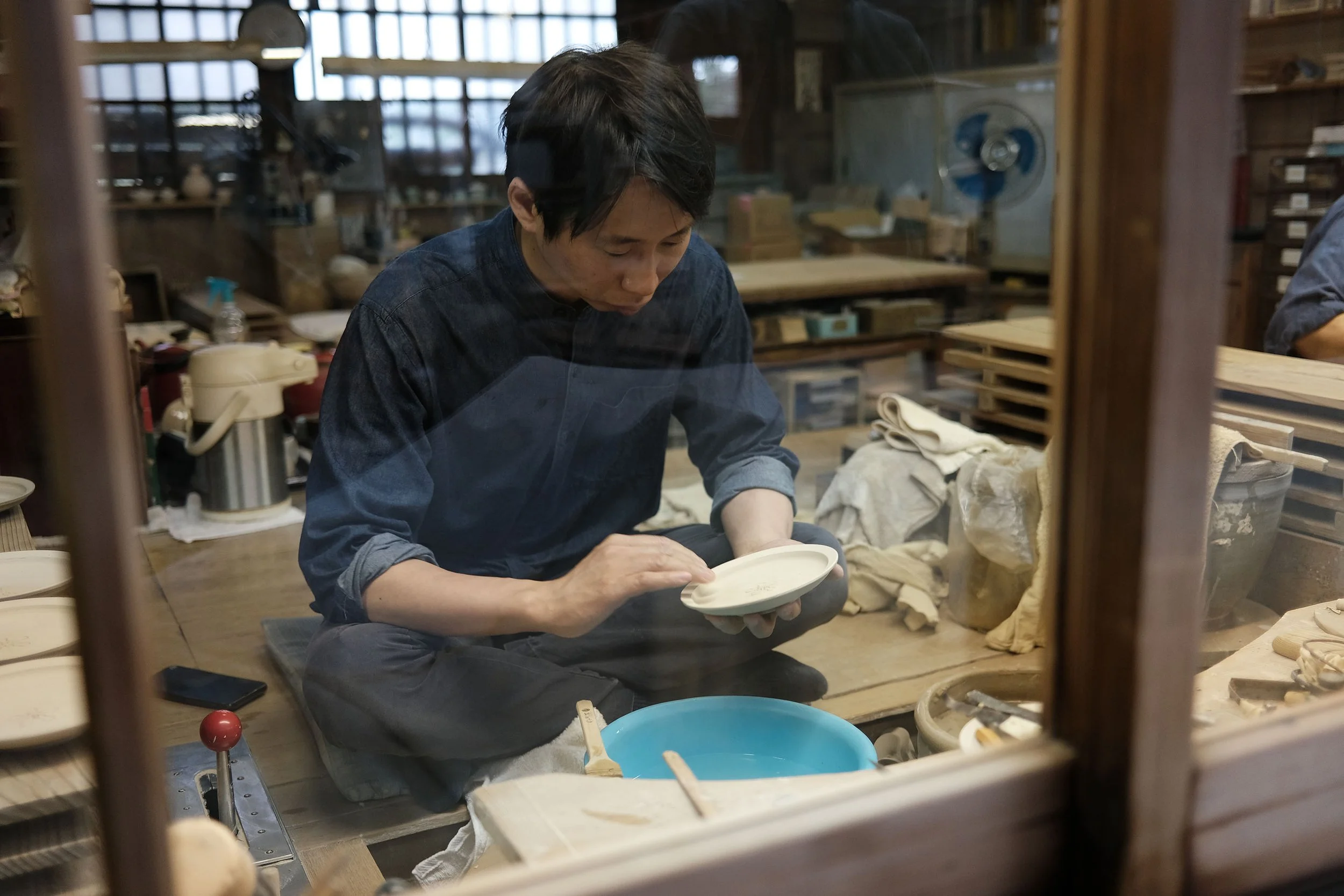
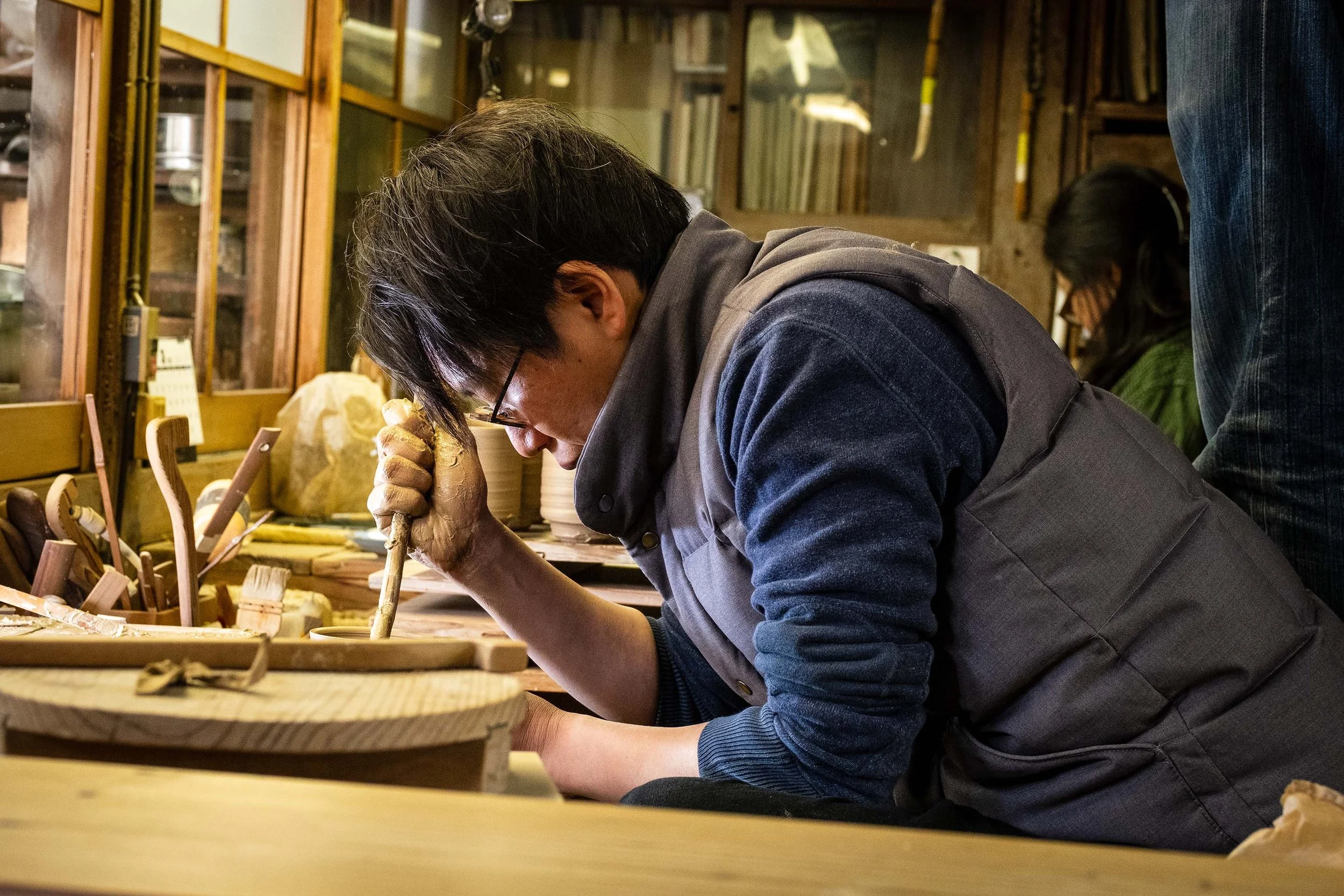
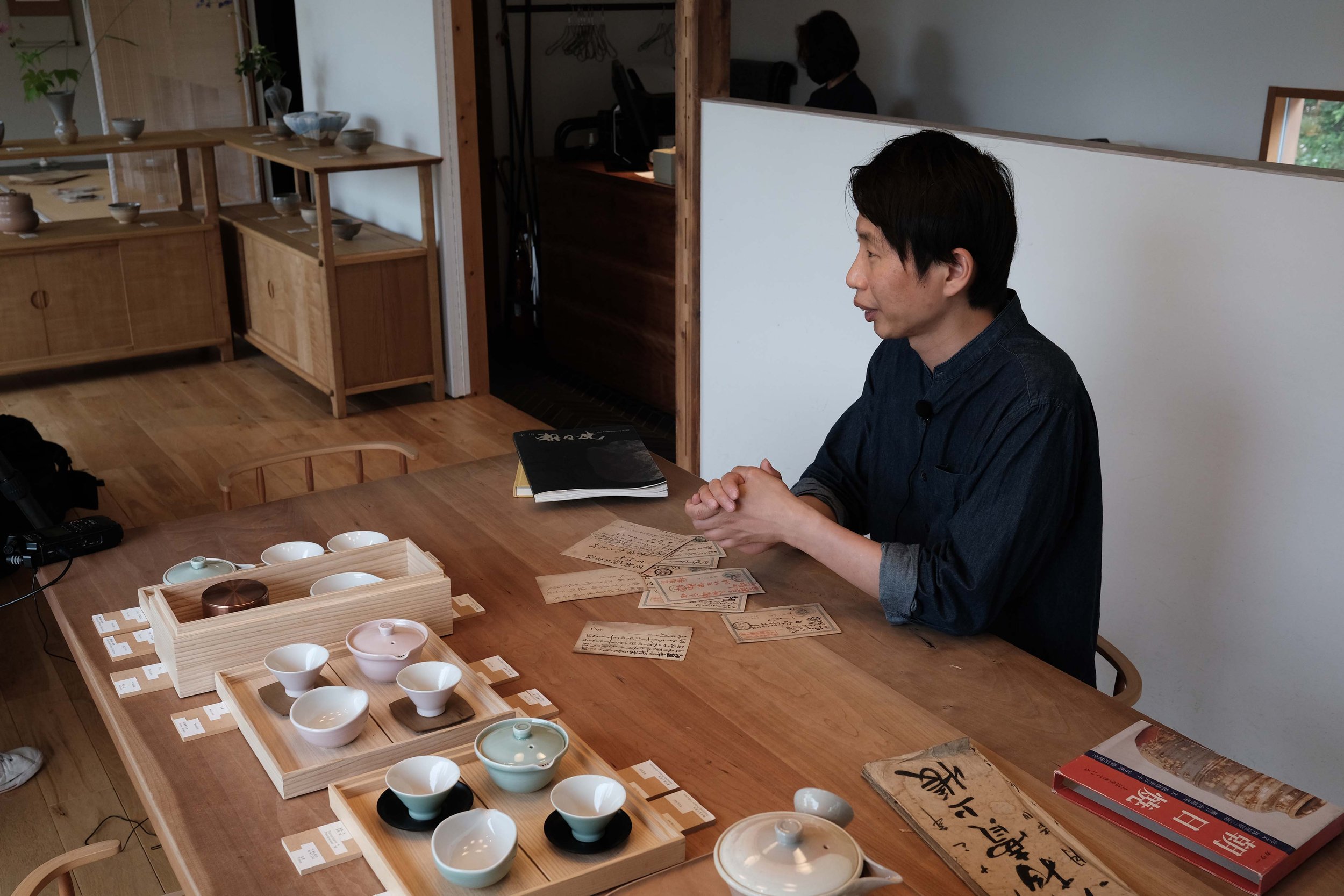
To a Japanese Tea practioner, Asahiyaki wares are well-known and collected to complete a good tea utensil collection. Kobori Enshu, a highly regarded warlord/aesthete/scholar/landscape designer/tea master of the Edo period, was a key figure in maintaining the Tea Ceremony (the way of tea) as a tradition worthy of the most important people of Edo period Japan, and his extensive research, writings, and organization of the Tea tradition and the utensils used within created a valuable system of art appraisal and cultural appreciation upon which even modern day tea people rely for growth and guidance.
Among his appraisals, he celebrated several kilns for their skill, uniqueness, and craft: the “Seven Kilns of Enshu.” Among them, Asahiyaki kiln was named. Asahiyaki wares can be found in museum collections worldwide, and many of the generational heads of the Asahiyaki line have been celebrated for their skill. In the modern day, Asahiyaki wares are sought by matcha tea and leaf tea drinkers for both use in traditional settings and in the home. It is a treasured part of Uji city, well known for its tea throughout Japan.
“What an act to follow!” You may find yourself thinking. Matsubayashi Hosai XVI is indeed the receipient of a great legacy. While most of us live in the present, trying to be sure we have enough to survive and hopefully retire comfortably, Hosai must look to and draw from the past – carry on that which has come before - while also putting some thought into what not only his work, but what the next generation can or should do.
Past, Present, and Future. This much broader way of thinking is soaked into everything in Kyoto. I personally felt it (first not understanding it) in my experiences in an office setting, when developing projects for my organization. Simply getting past the Friday deadline is not as important as what today’s work means for a decade from now, or for the next generation. To myself at first, it felt like an impossibly heavy weight to drag along, struggling ever harder to move forward even a few steps. With time, however, it began to feel more like ballast – certainly a weight, but a steadying force on a turbulent sea of time and ever-changing eras. In Matsubayashi Hosai, you can see that steadiness, and wonder at his own way of balancing the weight of time.
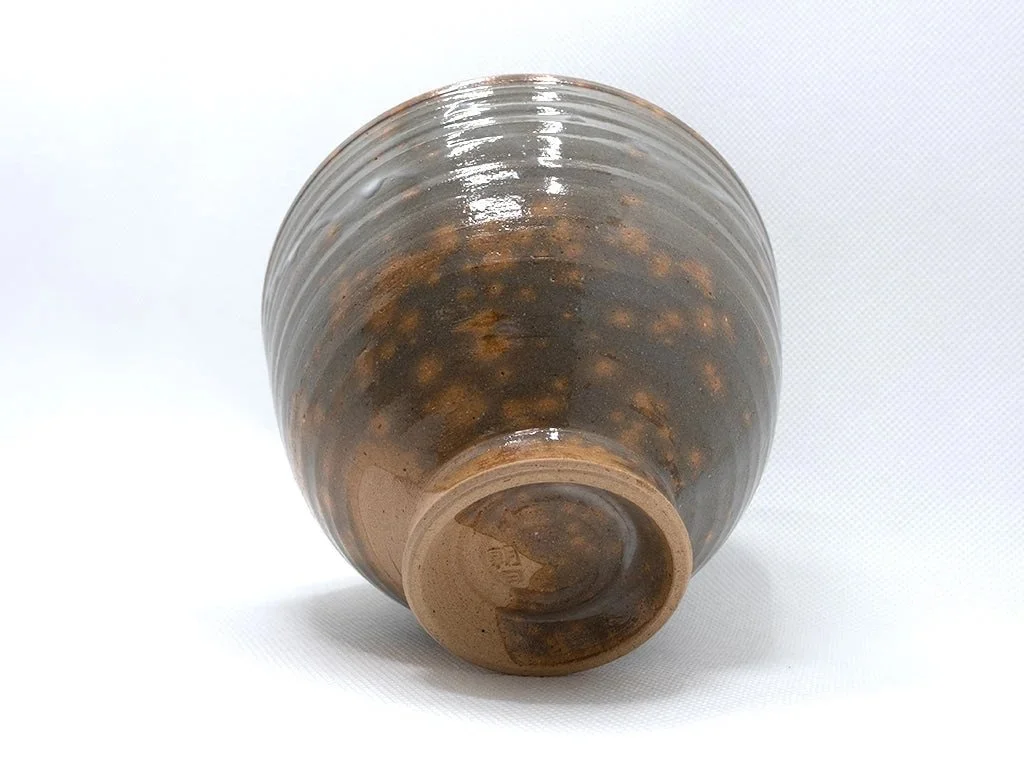
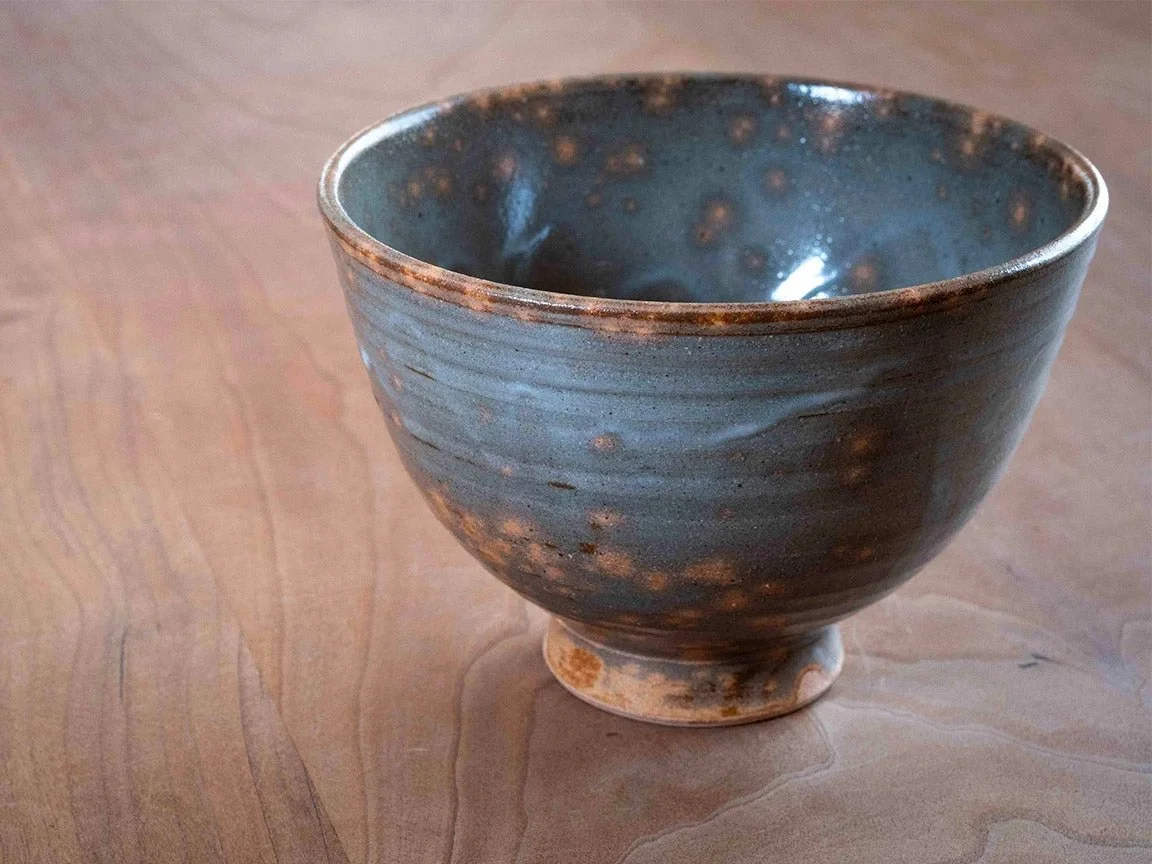
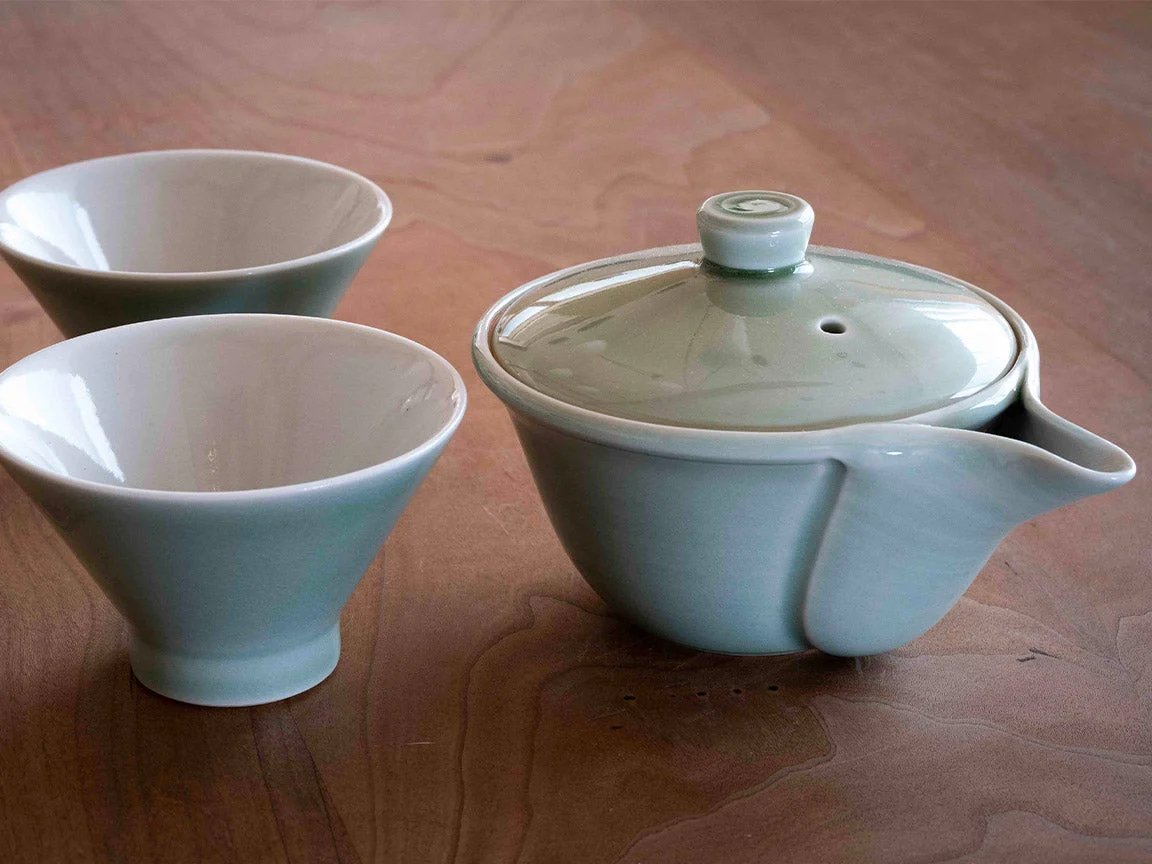
At Asahiyaki, he continues to create representative Asahiyaki works that feature the unique Kase deer spot coloration that occurs with their unique clay and firing techniques. At the same time, he is pushing into new territories with his own light blue geppaku (glow of the moon) glaze, which looks good not only in a semi-ark traditional tea setting, but also works well in the brighter and more modern tea spaces of this century. The works are beautiful, and the beauty only gets deeper as you realize the scale of time that led to these modern creations, and the spirit behind their making.
When you look into your tea bowl, mug, or tea set, how deep can you see? In a world of minimalization, let’s be sure that our small pantries are filled with artworks with depth nearly unfathomable.
It’s this kind of utensil selection that starts that lovely mixture of the arts and the everyday
so commonly found in Japanese lifestyle. Art becomes part of life, living becomes art.
Made possible by UNJAPAN
Article by Mike Hardy
Photos by Pierre Verney